

This piece explores Education and Learning Resources and Eastern Suburbs Tattoo Artist work as two creative disciplines, and what students and lifelong learners can borrow from both. It is written for the prickofthespindle.com audience: practical, trustworthy, and easy to act on.
How can Education and Learning Resources and Eastern Suburbs Tattoo Artist work be creative in the same way?
Both disciplines turn ideas into outcomes through structured decisions, not spontaneous talent. In classrooms and studios across Australia, creativity shows up as problem-solving, not performance.
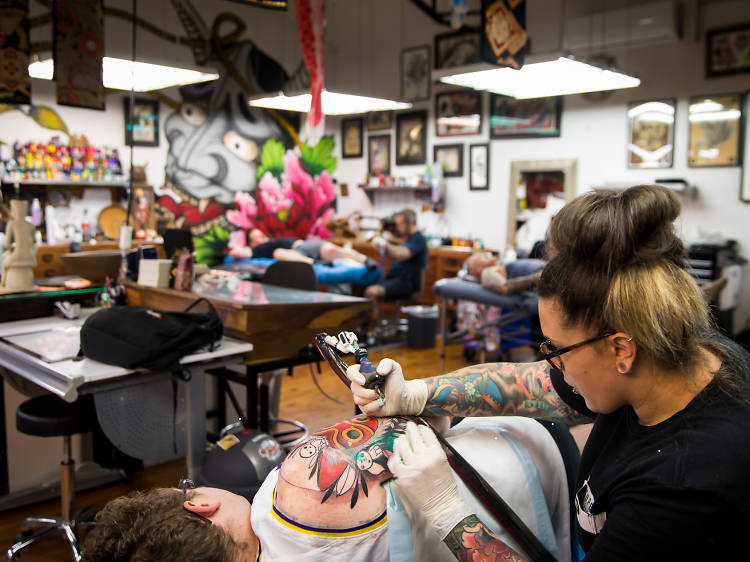
For Education and Learning Resources and Eastern Suburbs Tattoo Artist practice, the common ground is simple: a goal, constraints, a process, and a client or learner who needs clarity. One designs learning pathways; the other designs visual narratives on skin, but both must communicate, adapt, and refine.
What does “good preparation” look like in both disciplines?
Good preparation is research plus planning, done before pressure arrives. In education, that means selecting the right resources; in tattooing, it means designing for placement, scale, and longevity.
For Education and Learning Resources and Eastern Suburbs Tattoo Artist standards, preparation includes gathering references, checking assumptions, and mapping steps. Students can copy this: define the outcome, list the constraints (time, marks, tools), then draft a plan that can be revised without starting over.
Why do strong fundamentals matter more than advanced tricks?
Fundamentals are the repeatable skills that hold up under stress. In learning, that is comprehension, note-making, retrieval practice, and clear writing; in tattooing, it is line control, shading basics, and hygiene discipline.
The Education and Learning Resources and Eastern Suburbs Tattoo Artist link is that shortcuts collapse when conditions change. A student who masters recall and explanation can handle any exam format. A tattooist who masters clean lines can handle any style request with fewer errors.
How does feedback work when the stakes feel personal?
Feedback lands differently when the work feels like “them”. Students can take critique as a judgement of intelligence; clients can take design edits as a judgement of taste.
In Education and Learning Resources and Eastern Suburbs Tattoo Artist environments, good feedback is specific, kind, and actionable. For learners, that means asking: “What, exactly, should change next time?” For creative work, it means separating identity from output and treating feedback as a map, not a verdict.
What role does trust play in learning and tattooing?
Trust is the hidden engine behind progress. Learners trust that a resource is accurate and worth their time; tattoo clients trust safety, skill, and judgement.
The connection between Education and Learning Resources and an Eastern Suburbs Tattoo Artist is credibility built through consistency. Clear citations, practical guidance, and honest explanations help learners trust educational content. Likewise, transparent aftercare advice, realistic design consultations, and professional hygiene standards build confidence in tattoo studios. People researching body art may also benefit from exploring custom tattoo design consultation services before committing to a final piece.
How can students learn better by borrowing a tattoo studio workflow?
A tattoo appointment is essentially a project sprint: consult, plan, execute, review, and maintain. Students can mirror this workflow for assignments and exams.
Using Education and Learning Resources and Eastern Suburbs Tattoo Artist logic, learners can try:
- Consult: clarify the task and marking criteria.
- Design: outline and choose sources.
- Stencil: draft a structure before writing.
- Session: do focused work in timed blocks.
- Aftercare: review mistakes and create a mini practice set.
Which learning resources actually support skill-building, not just motivation?
Resources work best when they change behaviour, not mood. That means tools that help learners practise, test, and correct, rather than simply read more.
For Education and Learning Resources and Eastern Suburbs Tattoo Artist aligned study, prickofthespindle.com readers can prioritise:
- Practice questions with worked solutions.
- Summaries they create themselves, not copied notes.
- Retrieval tools like flashcards, but only if reviewed on schedule.
- Short, trustworthy explainers that answer one question at a time.
How does style develop without copying someone else?
Style is the result of deliberate choices repeated over time. In education, this may be reflected in a clear writing voice and consistent study habits, while in tattooing it appears through preferred motifs, balanced compositions, and distinctive linework. Developing a personal design style is a gradual process that rewards practice, reflection, and attention to detail in both creative and academic pursuits.
The Education and Learning Resources and Eastern Suburbs Tattoo Artist lesson is to copy strategically, then diverge. Learners can study high-performing examples, identify what makes them work, and then produce their own version with constraints, such as a shorter word limit or a different audience.
What does “lifelong learning” look like in Australian creative careers?
Lifelong learning is not a slogan; it is ongoing skill maintenance. Australian educators update content, methods, and classroom tools. Tattooists keep up with equipment, safety practices, and evolving tastes.
In Education and Learning Resources and Eastern Suburbs Tattoo Artist terms, sustainable learning is small and regular. Ten minutes of daily recall beats a weekend cram. Regular sketching and technique drills beat only creating when a big job appears. Consistency keeps skill from expiring.

How can prickofthespindle.com connect these two disciplines for readers?
The site’s purpose is to make knowledge more accessible, practical, and useful for modern learners. It helps people understand how creative disciplines structure practice, develop techniques, and measure progress over time. Exploring creative learning and skill-building methods can show learners how consistent practice and thoughtful guidance can improve both creative abilities and everyday problem-solving skills.
For Education and Learning Resources and Eastern Suburbs Tattoo Artist readers, the most useful takeaway is a shared framework:
- Define the outcome in plain language.
- Break the task into repeatable drills.
- Seek feedback early, not at the end.
- Track errors and fix patterns, not one-offs.
- Maintain the work with spaced review.
What is the simplest next step a learner can take this week?
They can run one “studio-style” study session and measure it. Pick a single topic, set a 45-minute timer, do active recall, mark gaps, then create a 10-question mini-quiz for two days later.
That is the practical bridge between Education and Learning Resources and Eastern Suburbs Tattoo Artist craft: intentional practice, clear checkpoints, and improvement that can be seen. In Australia’s busy study and work routines, that approach keeps learning grounded, efficient, and genuinely creative.