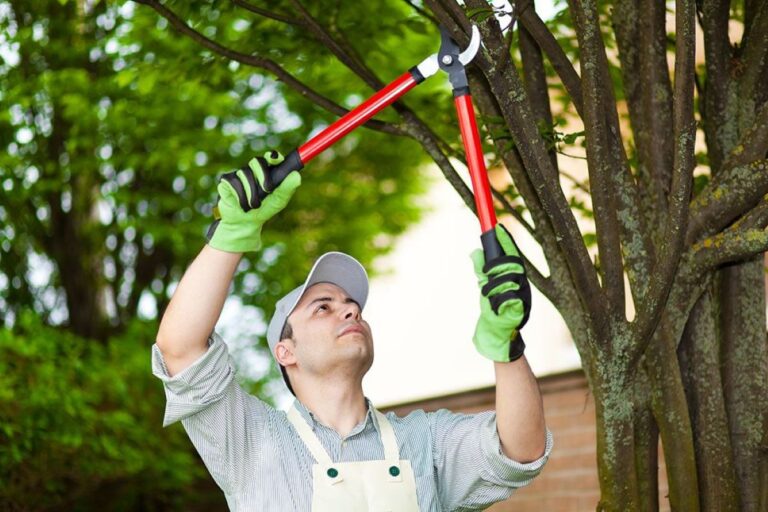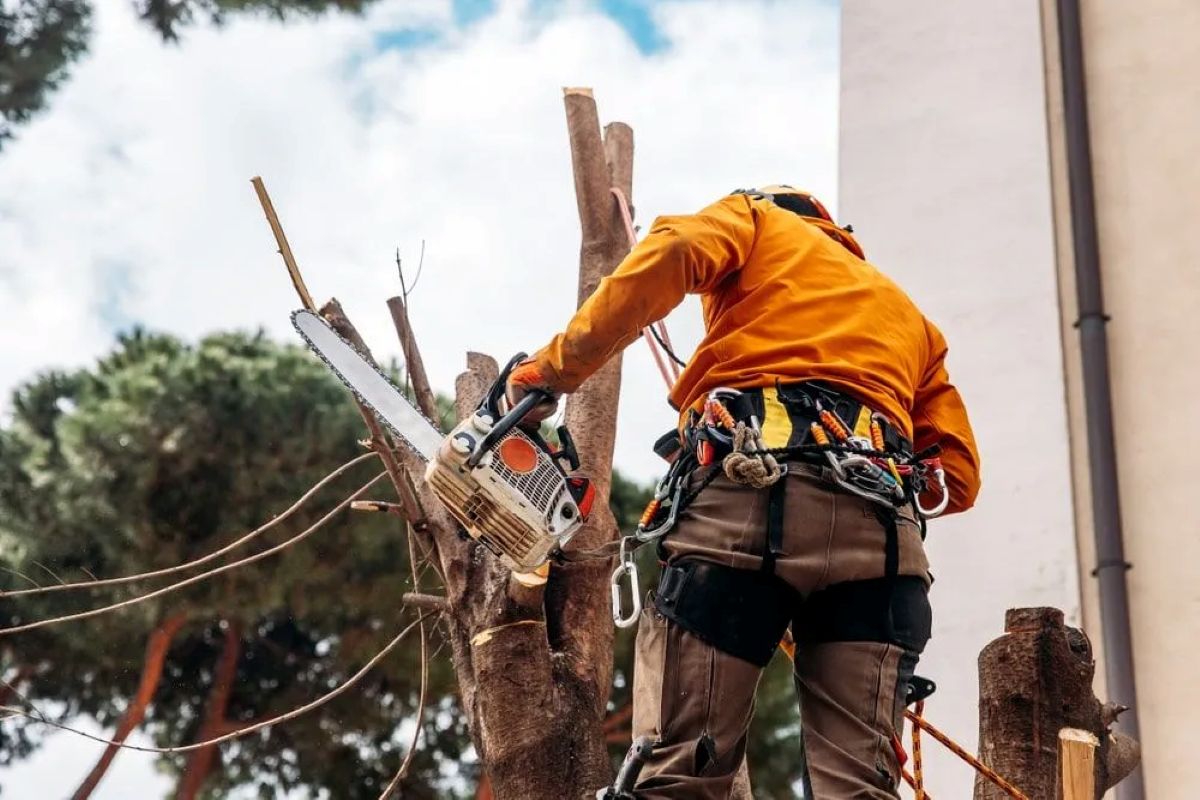

Sydney’s urban landscape thrives on its diverse tree population, from towering eucalypts to ornamental natives that line suburban streets. When these trees require maintenance, property owners face a critical decision: should they call an arborist or a tree lopper? The choice between these two Sydney tree care professionals can mean the difference between a thriving, healthy tree and one that becomes a safety hazard.
Tree loppers specialize in cutting and trimming branches, often providing quick, budget-friendly solutions for overgrown limbs or emergency removals. Arborists, by contrast, are certified specialists who approach tree care with comprehensive knowledge of tree biology, health assessments, and long-term preservation strategies. While both professionals work with trees, their training, expertise, and service scope differ dramatically.
Selecting the right professional matters beyond just the immediate task at hand. Poor pruning techniques can compromise a tree’s structural integrity, leaving your property vulnerable during Sydney’s notorious storm seasons. Legal complications can arise when working with protected species without proper documentation—such as endangered species listed under Australian law. The financial impact extends beyond the initial service call—improper tree work often leads to costly remediation or complete removal down the line.
This article explores the arborist vs tree lopper debate through a Sydney-specific lens. You’ll discover:
- The fundamental differences in training, certification, and knowledge between these professionals
- Specific scenarios where each type of service provider excels
- How your choice affects property safety, legal compliance, and long-term costs
- Red flags that signal an unqualified tree lopper
- Practical guidance for making the right decision based on your unique situation
What Are the Main Differences Between an Arborist and a Tree Lopper?
The main difference is in their training and certification. Arborists complete accredited courses in arboriculture, earning qualifications such as AQF Level 3 Certificate III or higher, while tree loppers usually don’t have formal certification and rely on practical experience.
Training and Certification Standards
Arborist qualifications require rigorous education covering plant diseases, soil science, pest management, and advanced pruning techniques. Most certified arborists in Sydney hold credentials from organizations like Arboriculture Australia or the International Society of Arboriculture. These professionals must complete ongoing education to maintain their certification status.
Tree lopper skills develop primarily through hands-on work rather than structured education. Many tree loppers learn through apprenticeships or on-the-job training without pursuing formal qualifications. This practical approach means they can perform basic cutting tasks but may lack theoretical understanding of tree physiology.
Knowledge of Tree Biology and Health
Arborists possess comprehensive tree care expertise that extends far beyond cutting branches. They can:
- Identify over 100 species common to Sydney and understand their specific growth patterns
- Diagnose diseases, pest infestations, and nutrient deficiencies
- Assess structural integrity and predict failure points
- Recommend treatments that preserve tree health for decades
Tree loppers generally focus on the mechanical aspects of cutting and removal. Their knowledge centers on safe operation of chainsaws and climbing equipment rather than understanding how pruning decisions affect long-term tree vitality. This limited scope means they may not recognize early signs of disease or structural weakness.
Service Offerings and Approach
Arborists provide holistic tree management including health assessments, soil testing, cabling and bracing for structural support, disease treatment programs, and detailed reports for council applications. They approach each job by evaluating the tree’s condition, considering environmental factors, and planning interventions that support sustainable growth.
Tree loppers specialize in cutting services such as crown reduction, branch removal, stump grinding, and complete tree removal. Their work focuses on immediate physical alterations rather than long-term care strategies. Many tree loppers excel at efficient removal but don’t offer consultation services or follow-up
When Should Sydney Residents Hire an Arborist Instead of a Tree Lopper?
Signs of Tree Disease or Decline
Does your tree show signs of disease or unexplained decline? Qualified arborist services Sydney providers conduct comprehensive health assessments that identify fungal infections, pest infestations like the Emerald Ash Borer, and structural weaknesses invisible to untrained eyes. An arborist examines bark texture, leaf discoloration, branch dieback, and root conditions to diagnose problems accurately. They recommend targeted treatments like soil amendments, pest management strategies, or selective pruning that addresses the underlying cause rather than just removing symptomatic branches.
Major Property Changes Near Established Trees
Are you planning major property changes near established trees? Construction projects, pool installations, and landscaping renovations can severely damage root systems and compromise tree stability. Arborists create tree protection zones, assess which roots can be safely pruned, and monitor trees throughout construction phases. They provide documentation showing compliance with Australian Standards for tree protection during development, which councils often require before approving building permits.
Handling Protected Species and Legal Requirements
Is your tree subject to council protection orders? Sydney councils maintain registers of significant trees protected under local environmental plans and tree preservation orders. Removing or even pruning these specimens without proper authorization results in substantial fines reaching tens of thousands of dollars. Arborists understand protected species legal restrictions, prepare required documentation, and liaise with council officers to obtain necessary permits. They assess whether proposed work complies with regulations or if alternative solutions better serve both property needs and conservation requirements.
Native species like Angophora costata (Sydney Red Gum) and Eucalyptus saligna (Sydney Blue Gum) frequently receive protection status. Heritage-listed properties face additional restrictions on tree modification. Arborists navigate these complex regulatory frameworks, ensuring all work meets legal standards while preserving ecologically valuable specimens.
Preserving Trees for Future Generations
Do you want your trees to thrive for decades? Long-term tree health depends on pruning techniques that respect natural growth patterns and maintain structural integrity. Arborists practice reduction pruning that maintains the tree’s form while managing size, unlike indiscriminate cutting that creates weak regrowth prone to failure. They time interventions according to species-specific growth cycles, minimizing stress and maximizing recovery.
Mature trees add value to properties and provide numerous environmental benefits such as carbon sequestration, habitat creation, and shade provision. By investing in professional arboricultural care now, you ensure these living assets continue flourishing long into the future.
When Should You Use a Tree Lopper for Tree Care in Sydney?
Tree loppers are useful in situations where immediate action is needed and complex health assessments are not required. For example, after a storm when branches are damaged and pose a safety risk, or when overgrown limbs threaten power lines or buildings, the priority becomes removing the branches quickly rather than focusing on the long-term health of the tree.
Simple Cutting Tasks That Don’t Need Specialized Knowledge
Basic trimming jobs that Sydney residents often need can usually be done by a tree lopper. These are simple tasks like clearing branches from roofs, reducing the density of tree canopies to let more light in, or removing dead wood from areas that are easy to reach. These services offered by tree loppers are cost-effective and make sense when the work involves:
- Cutting back overgrown hedges or shrubs
- Removing small to medium branches from non-protected tree species
- Completely removing a tree when preserving it is not a concern
- Clearing vegetation for construction or landscaping projects
Budget Constraints for Routine Maintenance
Property owners who have limited budgets may find it more affordable to hire tree loppers for regular maintenance tasks. The lower rates charged by tree loppers are due to the fact that they don’t require formal certification or specialized diagnostic equipment. A tree lopper can handle basic pruning jobs at a much lower cost compared to certified arborists, making it easier for homeowners with multiple trees to maintain them regularly.
Understanding the Trade-offs of Choosing Cost Over Expertise
However, relying solely on tree loppers has its limitations. Since these professionals do not have training in tree biology, they may cut branches incorrectly which can lead to diseases or structural weaknesses in the tree. Poor pruning techniques such as topping or flush cutting can permanently damage the growth patterns of a tree and make it more vulnerable during severe weather events in Sydney.
The immediate savings gained from hiring a tree lopper may end up being expensive if their improper work requires corrective pruning, disease treatment, or early removal of the tree. Trees that have been indiscriminately cut often develop dangerous conditions like weak branch attachments, unbalanced canopies, or decay which can pose liability risks for property owners.
When Speed Matters More Than Precision
In some time-sensitive situations, it may be necessary to choose a tree lopper despite its drawbacks. For instance, if a fallen branch is blocking a driveway, preventing access to a property, or creating an urgent safety hazard. Want to get more about forestry visit https://www.agriculture.gov.au/agriculture-land/forestry.
How Does Hiring an Arborist Benefit Property Safety and Compliance?
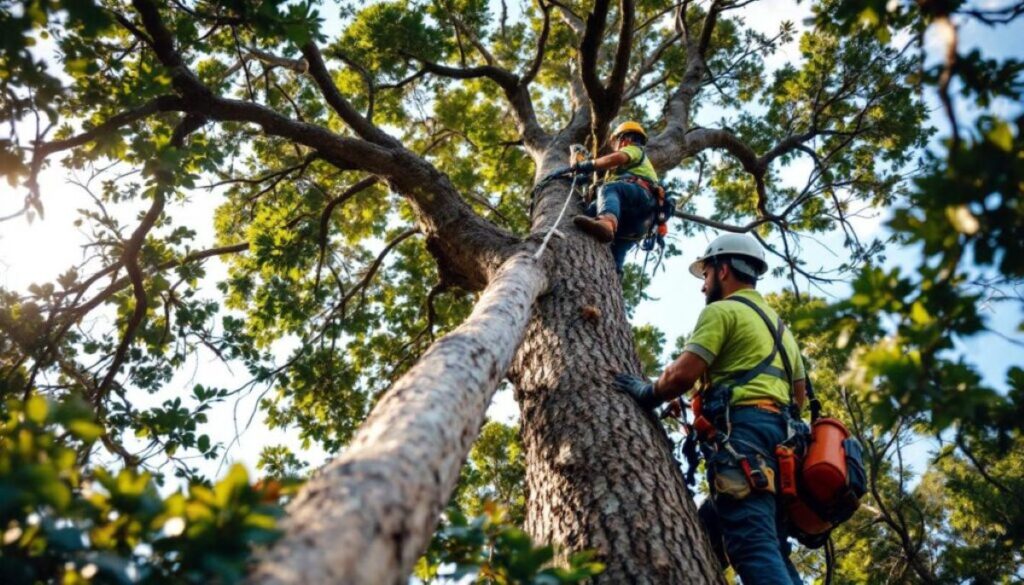
Certified arborists follow strict arborist safety standards that protect both your property and the people working on it. They use specialized equipment like rigging systems, crane-assisted removal techniques, and precision cutting tools that prevent uncontrolled branch falls or structural damage to nearby buildings. This professional approach reduces liability risks significantly compared to unqualified workers who may lack proper safety protocols.
Arborist Involvement for Council Permits
Council permits Sydney requirements often mandate arborist involvement for specific tree work. Many Sydney councils require a qualified arborist’s assessment before approving permits to prune or remove protected trees, particularly native species or trees in heritage conservation areas. Arborists understand local regulations and can navigate the permit application process efficiently, saving property owners from potential fines or legal complications that arise from unauthorized tree work.
Legal Weight of Insurance Reports for Trees
The documentation provided by arborists serves critical functions beyond regulatory compliance. Insurance reports for trees prepared by certified professionals carry legal weight when filing claims for storm damage or demonstrating due diligence in property maintenance. Insurance companies frequently request arborist reports to verify that tree-related incidents weren’t caused by negligence, and these detailed assessments can mean the difference between claim approval and denial.
Risk Assessments to Prevent Hazards
Property owners face substantial financial exposure when trees pose hazards to structures, power lines, or public spaces. Arborists conduct thorough risk assessments that identify structural weaknesses, disease symptoms, and root system problems before they escalate into emergencies. Their preventative approach addresses potential failures through strategic pruning, cabling, or controlled removal rather than waiting for catastrophic collapse during severe weather events.
Liability Protection for Neighboring Properties
The liability protection extends to neighboring properties as well. When a poorly maintained tree damages an adjacent property, the tree owner may be held legally responsible. Arborist documentation demonstrates proactive care and professional judgment, providing crucial evidence that reasonable precautions were taken. This paper trail becomes invaluable in disputes or legal proceedings related to tree damage.
Maintaining Property Values with Professional Tree Care
Professional tree care practices implemented by arborists maintain property values by preserving healthy, aesthetically pleasing landscapes. Trees that receive proper care from qualified professionals contribute to curb appeal and environmental benefits without becoming liabilities. The investment in arborist services often prevents far more expensive remediation costs associated with property damage, emergency removals, or legal penalties from non-compliance with local tree preservation ordinances.
Moreover, hiring an arborist can significantly enhance tree care strategies through comprehensive reporting and assessment which can further aid in maintaining the health of your trees while ensuring compliance with local regulations.
What Are the Risks of Choosing an Unqualified Tree Lopper?
Choosing an unqualified tree lopper can lead to serious problems for your trees and property. Here are some of the risks involved:
1. Structural Damage
Unqualified tree loppers can cause irreversible structural damage through improper cutting techniques. When branches are removed without understanding tree biology, the cuts often leave stubs or tear bark, creating entry points for diseases and pests that compromise the tree’s internal structure.
2. Poor Pruning Practices
Inadequate pruning practices create a chain reaction of issues:
- Lion’s tailing: Removing too many interior branches while leaving foliage at the ends makes limbs more susceptible to breaking under their own weight. This article on lion’s tailing provides more insight into this issue.
- Topping: Cutting the main trunk or large branches indiscriminately triggers weak regrowth that’s poorly attached and prone to failure.
- Flush cuts: Removing branches too close to the trunk eliminates the protective collar tissue needed for proper wound closure.
- Over-pruning: Stripping more than 25% of a tree’s canopy in one session starves the tree and weakens its ability to defend against stress.
3. Unstable Growth Patterns
The risks associated with improper tree cutting go beyond immediate damage. Trees subjected to poor pruning techniques develop unstable growth patterns that persist for years. New shoots emerge from inappropriate locations, growing at weak angles that can’t support their eventual weight. The tree’s natural defence mechanisms become overwhelmed, leaving it vulnerable to Sydney’s harsh summer heat and storm seasons.
4. Increased Storm Damage Risk
Storm damage becomes significantly more likely when trees haven’t received proper maintenance. Branches with compromised attachment points or weakened internal structure can fail during Sydney’s severe weather events, particularly the intense storms that sweep through between November and March. A branch that appears secure during calm conditions may have hidden decay or structural flaws that only become apparent when wind loads increase.
5. Property Damage Consequences
Sydney residents face potential consequences from unqualified tree care, including property damage that insurance companies may refuse to cover. When investigations reveal that inadequate tree maintenance contributed to the damage, claims can be denied or reduced. Falling branches can strike roofs, vehicles, fences, and power lines, creating repair bills that far exceed the initial savings from hiring cheaper services.
6. Safety Hazards
Safety hazards multiply when unqualified work goes undetected:
- Deadwood remains in the canopy because it wasn’t identified during basic trimming.
- Cracks and splits in major limbs go unnoticed without proper inspection.
- Root damage from improper equipment use destabilizes the
How Do Cost Considerations Influence the Choice Between Arborists and Tree Loppers?
Why do arborists charge more than tree loppers?
Certified arborists command higher fees because their qualifications, insurance coverage, and specialized equipment represent significant professional investments. A typical arborist service in Sydney costs between $150-$250 per hour, reflecting years of training in tree biology, disease management, and safety protocols.
The cost comparison arborist vs tree lopper reveals several pricing factors:
- Certification and insurance: Arborists carry professional liability coverage and workers’ compensation, protecting property owners from potential claims
- Specialized equipment: Advanced rigging systems, aerial lifts, and diagnostic tools add to operational costs
- Council permits: Arborists handle documentation and permit applications for protected trees, which tree loppers cannot legally provide
- Travel and assessment fees: Initial consultations often include detailed tree health reports and treatment plans
What makes tree lopper services more affordable?
Tree loppers typically charge $80-$150 per hour for basic cutting and trimming work. Their lower overhead costs stem from minimal certification requirements and simpler equipment needs. Many operate as sole traders without extensive insurance coverage, passing these savings to customers seeking affordable tree services Sydney.
Basic tasks suited to tree lopper pricing include:
- Routine hedge trimming and shaping
- Simple branch removal from non-protected species
- Emergency storm damage cleanup
- Straightforward tree felling on private property
Can choosing cheaper services cost more long-term?
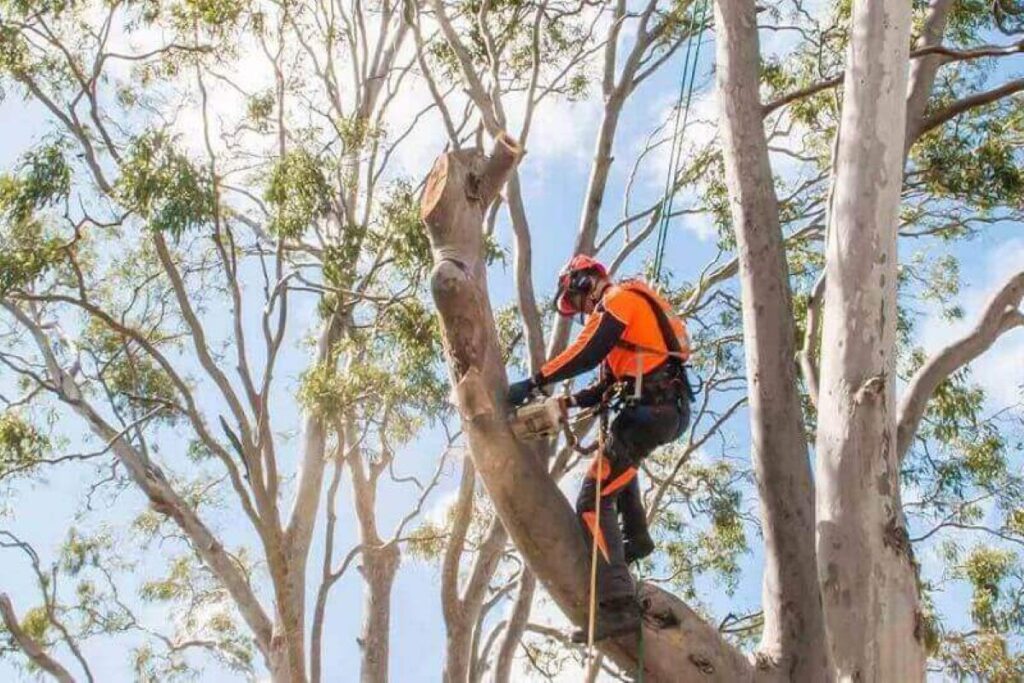
Improper pruning techniques create hidden expenses that surface months or years later. Trees damaged by incorrect cuts become vulnerable to disease, requiring expensive treatment or complete removal. A $500 tree lopping job might seem economical until structural damage necessitates a $3,000 emergency removal during the next storm season.
Sydney property owners face additional costs when unqualified work triggers:
- Council fines for unauthorized work on protected trees ($1,100-$11,000)
- Property damage from falling branches due to weakened structure
- Reduced property values from diseased or poorly maintained trees
- Emergency callouts during storms when compromised trees fail
How should budget constraints guide your decision?
Small, routine maintenance tasks without safety concerns justify hiring tree loppers for immediate cost savings. However, investing in professional arborist services for larger projects or protected trees can prevent costly repercussions down the line.
Conclusion
Which professional should Sydney property owners choose for their tree care needs?
The best tree care professional Sydney residents should hire depends entirely on the specific job requirements and long-term goals for their trees. Choosing between arborist and tree lopper comes down to balancing expertise, cost, and the complexity of work needed.
Hire a certified arborist when:
- Trees require health assessments or disease diagnosis
- Working with protected species under Sydney council regulations
- Pruning needs to maintain structural integrity and long-term vitality
- Official documentation is required for permits or insurance claims
- Property safety is a primary concern, especially near buildings or power lines
- The goal is tree preservation rather than simple removal
Consider a tree lopper for:
- Straightforward branch removal or basic trimming
- Emergency situations requiring quick response
- Complete tree removal where health preservation isn’t relevant
- Budget constraints on non-complex jobs
- Routine maintenance that doesn’t affect tree structure
The question of Arborist Vs. Tree Lopper: Which Professional Does Sydney Really Need? has no single answer. Sydney’s diverse urban forest and strict tree protection laws mean many situations demand the specialized knowledge only qualified arborists provide. Trees represent significant property value and environmental benefits that deserve professional care focused on longevity.
Property owners should request qualifications, insurance certificates, and references before hiring any tree care professional. Investing in proper arboricultural services often prevents expensive corrective work, potential legal issues with council regulations, and safety hazards that arise from improper tree maintenance. The upfront cost difference becomes negligible when weighed against the value of healthy, safe trees that enhance property aesthetics and environmental quality for years to come.
Related : The Fastest Way to Find Quality Tree Pruning Near Me